Henrico's tick pressure is a geography problem before it is a pest problem. Properties backing the greenbelts and walking trails in Twin Hickory and Wyndham, homes on the wooded lots off Gayton Road in Tuckahoe, and…
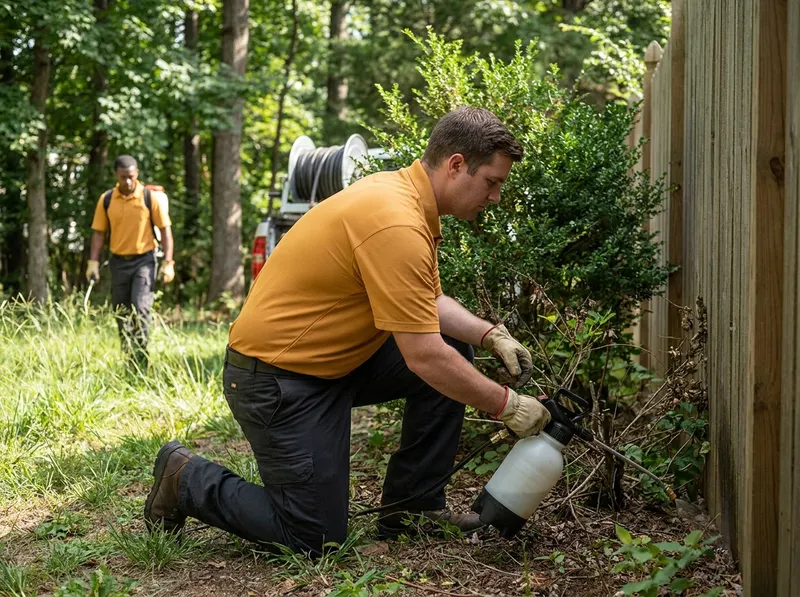
Henrico's tick pressure is a geography problem before it is a pest problem. Properties backing the greenbelts and walking trails in Twin Hickory and Wyndham, homes on the wooded lots off Gayton Road in Tuckahoe, and yards near Deep Run Park or Three Lakes Park all share the same feature: a hard edge where mowed turf meets shade, deer browse, and years of undisturbed leaf litter. That edge holds moisture, and ticks need humidity to survive between hosts. In Varina and out toward Dorey Park, the river-bottom brush and field margins add a different mix — American dog ticks and lone star ticks along paths and fencelines rather than deep forest. Central Virginia carries blacklegged (deer) ticks, American dog ticks, and lone star ticks, and the treatment approach differs by which one is dropping onto your dog.
Timing matters more with ticks than with most pests. Nymphs — the tiny, hardest-to-spot stage — surge in late spring and early summer, which is exactly when kids are barefoot in the yard and the dog is going out ten times a day. Adults are active in spring and again through fall, so a single mid-August treatment does very little for a household that spent May pulling ticks off a retriever. If you are calling because you already found one attached, we will treat, but the honest recommendation is to start the following spring before the nymph peak and treat the edge on a schedule through the season.
Here is the decision most Henrico homeowners are weighing. A one-time treatment fits a specific event — a graduation party in Glen Allen, a wedding in the backyard, a listing photo shoot in Short Pump — or a single confirmed find on a small, mostly sunny lot with no woods behind it. It knocks down the current population at the edge and buys you weeks, not a season. A seasonal program fits the property that will keep producing ticks no matter what we spray, because deer walk through it every night: acreage in Varina, ravine lots in Tuckahoe, homes along the wooded strips behind Innsbrook and Laurel. The trade-off is straightforward — one visit costs less and expires sooner; a program costs more across the year and holds numbers down through the months your family is actually outside. Nobody is required to sign up for ongoing service to get a treatment, and we will say plainly which one your lot needs even when it is the cheaper one.
Treatment alone is half the job. Tick habitat responds to changes you can make yourself, and we write them down instead of keeping them a trade secret: pull leaf litter back from the play area and the patio, cut a mulch or gravel strip between the lawn and the tree line, move the woodpile off the ground and into the sun, thin dense English ivy and pachysandra where it meets turf, and keep the grass short along fencelines in older Lakeside and Highland Springs yards where mature trees shade most of the property. Homes near Sandston and Richmond International Airport with open field edges usually benefit more from a mowed buffer than from any additional chemical. Pets and re-entry get covered before we start — you will know which areas to keep the dog off, and for how long, based on the product label used that day.
Every job gets a firm, written price after a free on-site visit.
Tell us about your tick control job in Henrico and we'll send a clear, written quote — usually the same day.
 Vantora Pest Control Service